
A phrase a mentor of mine taught me was ‘delayed gratification’. This is when we choose not to indulge in an activity right away – giving ourselves the chance to want and expect that activity even more. It helps us to build up our willpower.
Often I have immense willpower – there are times when I have the will of steel. At other times, I feel as if things control me. Sometimes I feel that I have no choice but to eat the piece of chocolate cake, or drink the glass of wine. Sometimes my urges are so strong – sometimes I feel very, very weak.
Discipline: my friend or my enemy?
Discipline can give us freedom. I hate discipline for the most part. I went to a very strict school and I hated it. I am a bit of a mischievous person and an anarchist by nature. I do not like unnecessary rules and I like to break the rules just to shake up the establishment. Some people are naturally like this. I am not a bad person, I do not do evil, but I cause trouble and mischief because I like drama and I like to unsettle the status quo. After all, what are we here for if not to question, disrupt and overturn?
And so to delayed gratification.
I often find with eating that the time it is most difficult for me to keep to my eating plan is right after I have finished eating a meal in the right portion. My mind will say, “That’s not enough – I must have more.” But I find that if I can delay my response for only a few minutes, I forget about wanting more food and I can usually push on to the next meal.
Get your reward later, not now
The idea behind delayed gratification is forfeiting a small reward in order to gain a bigger one down the track. I have written before about the marshmallow experiment from the 70s which showed that kids who could delay their gratification tended to be more intelligent and score better on other tests.
According to the wiki entry on delayed gratification: ‘a person’s ability to delay gratification relates to other similar skills such as patience, impulse control, self-control and willpower, all of which are involved in self-regulation. Broadly, self-regulation encompasses a person’s capacity to adapt the self as necessary to meet demands of the environment.’
Are you a successful self-regulator?
So SELF REGULATION seems like something a person should to try to cultivate. This in a way is why I am largely opposed to the use of anti-psychotic medication when it comes to treating depression and other anxiety disorders. That’s also why I don’t think gastric banding is ideal either. Having said that, often these extreme methods help people to learn to regulate themselves; how to eat correct portions and how to get through a day without a manic episode.
Did you practise your diet beforehand?
How about this for a theory. Should you ‘practise’ your dieting first, before you actually begin to restrict your eating? There was an article from the UK that suggested that we should be practising our dieting before we kick it off. The study showed that women who did a practice run before they started losing weight were better at keeping the pounds off. Researchers believe the secret of avoiding weight gain is making small, quick adjustments to eating habits before beginning a diet.
In life, as with watching what we eat, we need a strong mind
Strengthening the mind is no easy feat. It’s hard work and like a diet, it’s really easy to slip back into old habits, and all the good work is then undone. One person who has written a book on this is physician Alex Lickerman who wrote a book called The Undefeated Mind.
His book (he says) draws on the tenets of both Nichiren Buddhism and new scientific research to argue that resilience isn’t something with which only a fortunate few of us have been born, but rather something we can all take action to develop.
Learn to control your emotional reactions
The author says: Though absolute control over our response to adversity may elude us, influence over it need not. If we can’t change our emotional reactions by force of will, we can at least increase the likelihood that our reactions are constructive by cultivating something psychologists call personality hardiness: the capacity to survive and even thrive under difficult conditions—what in Buddhist terms would be considered a strong life force.
Emotions and food can control us
Oh, and other things too: gambling, drugs, sexual urges… almost anything that is pleasurable is susceptible to overuse and addiction. Even applying lip gloss can be addictive. It’s easier said than done. If you have tried this sort of work before, it’s very easy to read and comprehend. It’s very easy to feel excited about – but it is not easy to put into practice. It’s hard. Discipline takes lots of slow, small, measured steps before it becomes ingrained.
Do you struggle with over eating?
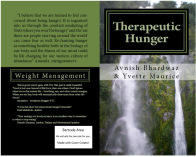
Another book you might enjoy is Therapeutic Hunger written by a fellow wordpress blogger. This book contains some breathing exercises and mediation techniques that might help those who are struggling with overeating.
Photo by abcdinner – thanks!